

Authentic Supporters lead the charge for 3SC, Rangers in Afr...
The Authentic Nigeria Football and Allied Sports Supporters Club has emerged as a prominent source o...
16 hours ago
This is the time for a comprehensive diagnosis, independent audit and structural reconstruction of Nigerian football




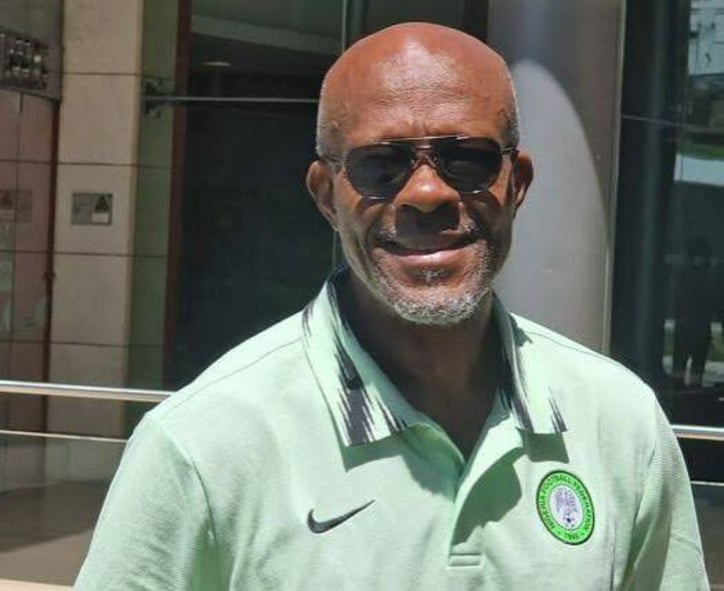
Nigerian football at the crossroads: Reforming or recycling?
By FAN Ndubuoke
“The greatest danger confronting Nigerian football at this moment is not that the reform might fail. It is that we may call something reform while preserving the very people, structures and interests that created the failure in the first place.”
President Bola Ahmed Tinubu's directive ordering a comprehensive reform of Nigerian football is, in my considered opinion, a welcome and long overdue intervention.
I welcome it. Nigerian football has reached a point where pretending that everything can continue as usual is no longer an option. The resignation of the leadership of the Nigeria Football Federation (NFF), following years of mounting public dissatisfaction, serious questions about accountability and a decline in the fortunes of our national teams, has created a rare opportunity, but I must state my reservation clearly: This opportunity must not be wasted.
Nigeria must not respond to decades of football decline by merely changing faces while preserving the structure that produced the decline.
We must not remove one set of administrators only to replace them with another set drawn from the same network, subscribing to the same culture and understanding football administration as a permanent political occupation rather than a public trust. This is not the time for cosmetic reform.
This is the time for a comprehensive diagnosis, independent audit and structural reconstruction of Nigerian football.
AUTONOMY CANNOT MEAN IMMUNITY
For years, Nigerians have been warned against government interference in football, and rightly so. FIFA statutes recognise the importance of autonomy in the administration of football.
Government should not select players, determine match results or manipulate football elections, but we must also be intellectually honest. Autonomy cannot become immunity. Football autonomy cannot mean freedom from accountability.
FIFA membership cannot become a shield behind which allegations of corruption, incompetence, financial opacity and institutional decay are protected from scrutiny.
Where public money is involved, Nigerians have a right to ask questions. Where allegations of wrongdoing arise, competent institutions have a responsibility to investigate. The fear of FIFA sanctions must never become an excuse for refusing to confront genuine questions about how Nigerian football has been administered.
The challenge, therefore, is to pursue accountability and reform through a process that is lawful, credible, transparent and compatible with Nigeria's international football obligations.
THE AUDIT MUST NOT STOP AT THE GLASS HOUSE
If the proposed audit and reform exercise is limited to the NFF Secretariat in Abuja, it will fail. The problems of Nigerian football did not begin and end at the Glass House. The examination must extend to the entire football architecture. It must look at the legal and statutory foundation of Nigerian football administration; the powers and structure of the NFF Congress; the electoral system; the concentration of power in the office of the NFF President; government interventions and football finances; FIFA and CAF funds; sponsorship and commercial agreements; national-team expenditure; procurement; domestic leagues; grassroots and youth football; coaching development; football academies; women's football; refereeing; player welfare and the treatment of former internationals. It must also examine the relationship and between football administration and the National Sports Commission.
Anything less will be an incomplete exercise and an incomplete diagnosis cannot produce a complete cure.
END "CHAIRMAN SUPREMACY"
One of the structural problems that must be addressed is what I have repeatedly described as Chairman Supremacy. Nigerian football must not be organised around the survival, power and influence of one individual. The President of the football federation must not become more important than the institution. Football administration must be institutional.
The elected leadership should provide policy direction and oversight, while competent professional managers handle the day-to-day administration of the game. We need clearly defined responsibilities, we need measurable performance standards, we need transparency, and, above all, we need institutions capable of surviving changes in leadership. No individual must become bigger than Nigerian football.
DEMOCRATIZE THE FOOTBALL SYSTEM
A football system cannot claim to be genuinely representative when those who play, coach and officiate the game have little meaningful voice in determining who governs it. Former internationals should not be remembered only during ceremonies. Players, coaches, referees, women's football and grassroots stakeholders must have meaningful representation in the governance structure.
State Football Associations are important stakeholders, but Nigerian football cannot be built around one dominant electoral bloc. The structure of the NFF Congress and electoral college should therefore be reviewed to ensure broader, more democratic and more balanced representation. Football must be governed by a structure that reflects the entire football ecosystem.
PAY-TO-PLAY ALLEGATIONS MUST BE PROPERLY INVESTIGATED
Nigeria must also stop pretending that allegations of improper financial influence in player selection do not exist. Such allegations have been made over the years by former players, coaches, journalists and other stakeholders. Some have been denied, others remain disputed. No one should be condemned without evidence or due process, but neither should serious allegations be dismissed without investigation.
Nigeria needs an independent integrity and ethics mechanism capable of investigating allegations involving player recruitment, agents, intermediaries and national-team selection. The national team shirt must never become merchandise.
Every talented Nigerian child must believe that ability, discipline and performance—not money, connections or influence—are the pathway to representing the country.
WHAT HAS HAPPENED TO OUR REFEREES?
Another important area requiring serious attention is refereeing. Nigeria is one of Africa's major football nations, yet we must ask why Nigerian referees are not consistently represented at the highest levels of international football as regularly as a country of our football stature should expect. Is the problem training, development, assessment, fitness, technology, integrity, promotion or administration?
A comprehensive reform cannot ignore these questions.
GRASSROOTS FOOTBALL AND PLAYER WELFARE
Nigeria cannot rebuild football from Abuja alone. We must return to the schools, communities and local competitions where talent is first discovered. We must strengthen youth football, train coaches, regulate academies and create credible pathways from grassroots football to the professional game.
The future Super Eagles and Super Falcons are playing somewhere today. The question is whether our football system can find them, develop them and protect them.
We must also pay greater attention to the welfare of former internationals who gave their best years to the country. Not every former player should automatically become an administrator, but qualified and competent former internationals should have opportunities to contribute to coaching, scouting, technical development and football governance.
MY MAJOR RESERVATION: THE REFORM MUST BE INDEPENDENT
My strongest reservation concerns the structure that will conduct the audit and reform. I have serious concerns about leaving the entire process solely in the hands of the National Sports Commission. This is not a personal attack on anyone. It is an institutional argument.
The National Sports Commission is itself part of the wider sports administration architecture within which many of the present challenges developed.
The legitimate question, therefore, is whether a system can be the sole judge of the system of which it has been a part. The NSC should participate in the process, but it should not monopolize it. Nigeria needs an independent, broad-based and credible reform mechanism.
I therefore propose the establishment of a National Football Reform and Reconstruction Commission, comprising persons of proven competence and integrity from football, corporate governance, finance, forensic accounting, law, sports law, coaching, refereeing, sports science, marketing, broadcasting, technology, youth development, women's football and the private sector. Credible and qualified former internationals should also be represented. The Commission must not become another political committee. Its terms of reference should be clear; its members should be screened for conflicts of interest; its findings should be evidence-based, and its report should be made public.
THIS MUST BE A REBIRTH, NOT A RECYCLING
There will be pressure to move quickly, there will be pressure to organise another election, there will be pressure to fill vacant offices and there will certainly be pressure from interests that do not want a thorough examination of the past.
Nigeria must resist the temptation to rush into another election without first addressing the structural problems that have repeatedly undermined the game.
An election is not reform. Changing faces is not reform. Changing offices is not reform. Recycling administrators is not reform.
Nigeria must first audit, it must investigate, it must resolve the legal and governance questions. It must consult widely, it must redesign the football structure, it must establish credible systems of transparency and accountability. Only then should we construct an electoral framework capable of producing the leadership of a new Nigerian football.
President Tinubu has opened the door. The question is whether Nigeria has the courage to walk through it. We can hold another election, preserve the same structure and return in a few years to ask once again why our football has failed; or we can choose courage.
Nigeria has the talent, Nigeria has the population. Nigeria has the passion. Nigeria has the history. Nigeria has the commercial potential. What we have lacked are institutions equal to our potential.
I therefore welcome President Tinubu's intervention, but I urge the President, the National Sports Commission, FIFA, CAF, the National Assembly and all genuine stakeholders not to treat this exercise as another routine transition.
This must not be business as usual, this must not be a reshuffling of offices, this must not be a recycling of administrators. Nigeria must use this moment to confront the truth, however painful that truth may be, because until we are prepared to identify what has held back Nigerian football, we cannot honestly claim that we know how to rebuild it.
Nigeria does not need another football transition, Nigeria needs a football rebirth. Institutions must become stronger than individuals; merit must become stronger than connections; transparency must become stronger than secrecy and Nigerian football must finally become greater than the politics that has held it hostage for far too long.
REFORMING OR RECYCLING? That is the question before Nigeria, and this time, we must get the answer right.
.Chief Sir FAN Ndubuoke, is a former President of Sports Writers Association of Nigeria (SWAN); a former NFF Board member; former Executive Chairman, Imo State Sports Commission and former Special Adviser to the former Minister of Sports, Late Air Commodore Emeka Omeruah-PhD.