

Nigeria's Pillar of Sports congratulates Benjamin on re-elec...
Nigeria’s Pillar of Sports has congratulated Comrade Isaiah Benjamin on his re-election as President...
4 days ago
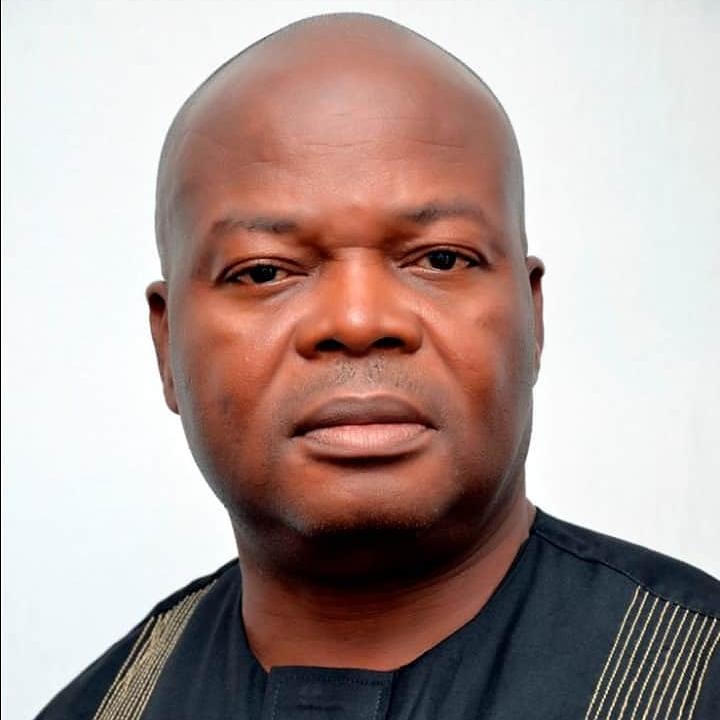
The President of the Sports Writers Association of Nigeria (SWAN), Mr. Benjamin Isaiah, has outlined his administration’s vision to rebuild the association into a respected professional body





'We've stabilised SWAN across the states, we're now more united than ever' - Benjamin Isaiah
The President of the Sports Writers Association of Nigeria (SWAN), Mr. Benjamin Isaiah, has outlined his administration’s vision to rebuild the association into a respected professional body while addressing critical challenges affecting sports journalists across the country.
Isaiah made this known during his appearance as a guest on the Friday night Super Interview session of the Sports World WhatsApp Platform, hosted by the platform’s founder and administrator, Mr. Sunday Agunbiade, popularly known as Mr. VAR.
During the interactive session, the SWAN President spoke extensively on issues ranging from the stability of the association, welfare of sports journalists, accreditation challenges, professionalism, digital transformation and the legacy he hopes to leave behind.
Here are some of the highlights of the key issues discussed during the interview.
Building a United and Respected SWAN
Since assuming office as SWAN President, Benjamin Isaiah said his administration’s major focus has been to create an inclusive leadership structure while restoring unity within the association.
According to him, one of the significant achievements of his tenure has been stabilising SWAN after years of internal disagreements and factional issues across some state chapters.
“I am not one that likes blowing his trumpet, but I try the best I can in my own way to run an all inclusive leadership. With the support of the National Executive Committee members and the full council members, we have continued to work together,” Isaiah said.
“What I can say for free as one of our achievements is that we have been able to stabilise the association. We are running, so far so good, a rank and file association that was either factionalised across various state chapters. Today, we have one SWAN that is not factionalised.”
The SWAN President explained that his administration has worked to address some of the longstanding challenges inherited before taking office, adding that his ultimate goal is to build an association that commands respect nationally and internationally.
“My vision for SWAN is to leave a legacy of an association that is well respected by all and sundry. That is my earnest desire, and we are doing the best we can to achieve that,” he added.
Isaiah acknowledged that although SWAN has made progress, there is still a long journey ahead.
“We are not where we used to be, even though we are not where we ought to be. But certainly, I know that the efforts we are putting in place will help us get to where we ought to be.”
SWAN Must Learn From Respected Professional Bodies
The SWAN President stressed that the association’s journey towards respectability must begin from within, urging members to embrace unity, professionalism and collective responsibility.
He compared the reputation enjoyed by organisations such as the Nigerian Bar Association and the Nigeria Union of Journalists to what SWAN should aspire to become.
“Nobody messes with the Nigerian Bar Association. Nobody messes with NUJ. These institutions are respected everywhere. But our own is a different thing,” Isaiah noted.
He insisted that sports journalists must first respect themselves and their association before demanding recognition from others.
“We need to first and foremost respect ourselves. We need to speak with one voice. We need to give all the necessary backing and support to leadership to be able to speak on our behalf.”
According to him, a united SWAN will have a stronger voice when engaging sports administrators, government agencies and private organisations.
Sports Journalists Welfare Remains a Major Concern
Addressing one of the biggest challenges facing sports journalists in Nigeria, Isaiah admitted that poor remuneration remains a serious issue that requires urgent attention.
He agreed that many sports journalists struggle because some media organisations provide little or no financial support, often claiming that they are offering journalists a platform to create opportunities.
“The welfare of sports journalists certainly remains a major concern. I agree with you absolutely,” he said.
The SWAN President explained that the challenge extends beyond sports journalism, affecting the wider Nigerian media industry.
According to him, journalists must be adequately compensated to enable them perform their duties professionally.
“Journalists need to be paid and paid well to be able to deliver on their mandate professionally.”
Isaiah questioned how journalists are expected to survive when they are not properly remunerated.
“Some organisations will tell you, ‘we have given you a platform, go and make money with the platform,’ and yet somebody is saying journalists are placing money above professionalism. So how do you survive? Should journalists die? Should journalists go hungry? How will they be able to work effectively?”
He, however, admitted that SWAN’s ability to directly influence media owners is limited.
“You don't tell the owner of a business how he or she should run his business. But we will continue to appeal to the consciousness of administrators and media owners to ensure journalists are paid well so that they can deliver well.”
Accreditation Challenges: SWAN Engaging FIFA and CAF
Beyond welfare concerns, Isaiah also highlighted the association’s efforts to address accreditation difficulties faced by sports journalists covering major competitions.
He revealed that SWAN has been engaging international football bodies, including FIFA and CAF, to help members overcome accreditation barriers.
“Issues of accreditation are everywhere. But we have been trying the best we can to write the necessary bodies, FIFA and CAF, to see how they can address challenges of accreditation for our members.”
According to him, the association has recorded successes, especially regarding journalists seeking access to major international competitions.
“Most of our members that had issues with their accreditation, particularly with the World Cup that is about to commence, we wrote to CAF and a number of them have their media accreditations now.”
He added that SWAN also assists members experiencing visa difficulties by writing supporting letters to embassies.
“We also write to embassies on behalf of our members that need visas, and we have been achieving substantial results.”
Fake News and the Responsibility of Sports Journalists
With the rapid growth of social media journalism, unverified reports and misinformation have become major concerns within sports media.
Isaiah explained that while SWAN encourages ethical journalism, the association has limited powers over the actions of individual journalists.
“As a member of SWAN, we don't have power over what members do. The only thing we keep doing at our level is to encourage our members to ensure that they are professional in all that they do.”
He noted that members could face disciplinary actions, including suspension or possible expulsion, depending on the circumstances.
However, he warned journalists that publishing false information or defamatory reports could have serious legal consequences.
“If you write wrong reports or defame anybody, you will be held responsible.”
Isaiah referenced previous cases where journalists faced legal battles over reports involving sports administrators, stressing the importance of accuracy and professionalism.
Improving Access for Sports Journalists
On the issue of access to matches, training sessions and sporting events, the SWAN President said the association continues to intervene whenever challenges are brought to its attention.
“We have been trying the best we can. It is only issues that are brought to our notice that we address.”
He explained that the association often engages relevant authorities and administrators to resolve access-related problems.
“We call the leaderships or the people concerned and address it accordingly, and we have been having some success.”
Preparing Sports Journalists for the Digital Era
As journalism continues to experience a digital revolution, Isaiah said SWAN is planning initiatives aimed at equipping members with modern skills.
He identified data journalism, multimedia reporting, investigative journalism and modern storytelling as important areas where sports journalists need improvement.
“We are also working very hard in the coming weeks and months to engage in partnerships with relevant organisations to prepare our members for the new digital era.”
He admitted that funding remains one of the biggest obstacles confronting the association.
“We don’t have any source of income, and many of these things cannot be carried out without funds.”
According to him, SWAN will seek partnerships with private organisations and embark on fund driven projects to support capacity building and improve members’ welfare.
“We are financially handicapped, but I am committed, God helping me and my National Executive Committee, to engage in activities that will lead to the well-being and welfare of our members.”
Isaiah’s Desired Legacy for SWAN
Looking ahead, Benjamin Isaiah said his biggest ambition is to leave behind a SWAN that commands respect and influence.
“My desire is to leave a legacy of an association that will be respected by all and sundry.”
He wants a future where sports administrators recognise the importance of sports journalists and understand the role they play in developing Nigerian sports.
“Anytime SWAN is mentioned, every sports administrator will know that these people shouldn’t be played with.”
Isaiah believes sports journalism remains a critical part of the sports ecosystem and must receive the recognition it deserves.
“Sport is a major sector that shouldn’t be taken for granted, and sports writers should also not be taken for granted.”
As his administration continues its mission, the SWAN President believes unity, professionalism and strategic partnerships will be key to transforming the association into the respected institution Nigerian sports journalists desire.