



Grassroots Football: NSSF lauds high standard of First Bank/...
The leadership of the Nigeria School Sport Federation(NSSF), technical partners of the First Bank/Sa...
2 days ago
In a time when public recognition often favours celebrities, executives and public office holders, the Class of 2006 of Nigerian Navy Secondary School, Ojo chose a different focus: the teachers who shaped their lives.




Navy Secondary School Ojo Class of 2006 sets standard on how to honour teachers
In a time when public recognition often favours celebrities, executives and public office holders, the Class of 2006 of Nigerian Navy Secondary School, Ojo chose a different focus: the teachers who shaped their lives.
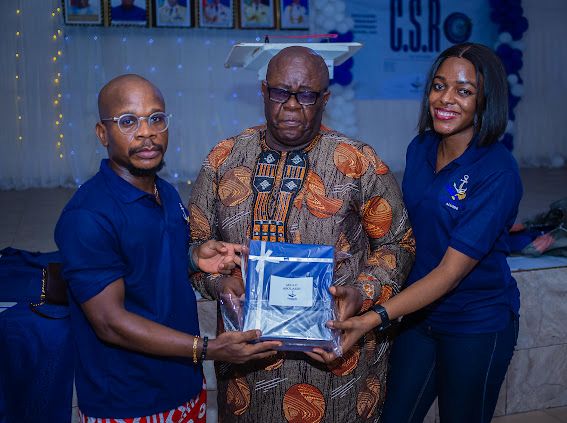
On Friday, February 13, 2026, more than 150 serving and retired educators gathered at the school hall, unaware that they were about to become the centre of a homecoming described by staff as unprecedented in the institution’s history.
There were no building unveilings or ribbon-cutting ceremonies. Instead, teachers were called forward one after the other to receive personalised commemorative boxes, financial gifts, and handwritten tributes from former students — many recounting lessons, corrections, encouragement and discipline that had altered the course of their lives. The emotional impact was immediate.
Veteran teachers who had once commanded classrooms with firmness found themselves in tears as excerpts from the letters were read aloud. Some wept openly. Others sat in stunned silence, visibly overwhelmed.
Mrs. Umejiburu, after seeing all that was done was overcome with happiness and thanked the alumni “It is only your set that has shown this much passion for the educators who impacted on them, we pray that you will continue to move forward in life.”
Outside the hall, in a moment that observers described as deeply symbolic, groups of teachers formed spontaneous prayer circles, holding hands and offering blessings for the alumni. It was not staged. It was not scripted. It was gratitude meeting gratitude.
Perhaps the most powerful scene unfolded when a retired teacher recovering from prolonged illness and adjusting to life after an amputation arrived quietly. She was met with applause, embraces and reassurance. Later, strengthened by the reception, she declared: “Indeed, God is great.”
For many watching, the day carried a message beyond celebration. It raised an important question: When last did we intentionally honour the people who formed us?
Across Nigeria and beyond, alumni groups frequently commission buildings and infrastructure projects — worthy efforts that strengthen institutions. Yet the individuals who poured knowledge, discipline and values into generations often retire quietly, uncelebrated and sometimes forgotten.
The Nigerian Navy Secondary School Ojo Class of 2006 demonstrated that legacy is not measured only in structures erected, but in gratitude returned.
Their gesture challenges professional associations, old student networks, corporations and communities to reconsider what impact truly means. A visit. A letter. A stipend. A public acknowledgement. These acts may appear small, yet they carry immeasurable emotional and psychological value for educators who dedicated their lives to shaping others and as the PRO of the alumni, Nneoma Nwamaka told the present teachers, “Be encouraged, because as we have remembered our past teachers and celebrate you alongside, 20 years from now, your own students will do even better”
One teacher remarked during the event, “Nobody ever remembers the teachers.”, yet on that Friday in Navy Town, they were remembered, with standing ovations, thoughts and gifts.
If replicated across schools and institutions, such intentional honour could restore dignity to a profession too often overlooked. It could remind society that behind every doctor, lawyer, engineer, artist and leader stands a teacher whose labour bore fruit.
The Class of 2006 has set a precedent. The question now is whether others will follow. Because gratitude, when expressed collectively, does more than honour the past — it strengthens the future.