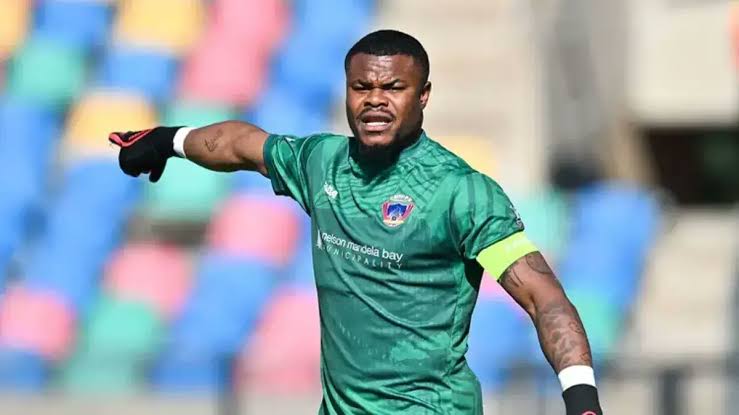
Hakimi regrets towel blow-out with Nwabali
Nigeria's AFCON 2025 semi-final clash against Morocco saw Stanley Nwabali‘s towel taken from him mul...
4 days ago
Arguably the most heated debate in African football spaces today is why Africa so often becomes the second choice for players with dual citizenship




My AFCON 2025 Observatory: Why Africa Is still the second choice in football
By Sola Fanawopo
Arguably the most heated debate in African football spaces today is why Africa so often becomes the second choice for players with dual citizenship.
The conversations in chat rooms, studios, and social media timelines are intense, emotional, and deeply personal. I have followed them closely, and while they are stimulating, many miss the central issue.
When Guéla Doué made his Africa Cup of Nations debut for Ivory Coast, the moment carried quiet symbolism. His brother, Désiré Doué, one of Europe’s brightest young talents, has chosen to represent France.
This is not an isolated family decision. It is a recurring pattern in global football—and it raises an uncomfortable question: why do African national teams so often become the second choice for players with dual citizenship?
The answer lies far beyond personal preference or patriotism. It sits at the intersection of colonial history and modern club power.
*Material conditions before sentiment*
As a materialist, I reject the popular tendency to blame footballers for making Africa their second choice. History teaches a harsher but clearer lesson: material conditions shape behaviour before ideas do.
What people believe, choose, or aspire to is shaped by who controls resources, who sets rewards and penalties, and who defines value.
Footballers are not immune to this reality.
The uncomfortable truth is this: African national teams are not “Plan B” because players disrespect them. They become Plan B because global football power is asymmetrically organised.
*Brothers, borders, and the logic of choice*
The stories of the Boateng and Williams families illustrate this better than any abstract theory. They show how *power, timing, and structure—not sentiment—* shape national allegiance in modern football.
Kevin-Prince Boateng represented Ghana, while his younger brother Jérôme Boateng became a World Cup winner with Germany. Same mother. Same upbringing in Berlin. Different football destinies.
Kevin-Prince, older and immensely talented but volatile, was eventually deemed surplus to Germany’s long-term plans. Ghana became his international home, and he repaid that trust with iconic AFCON and World Cup performances.
Jérôme, younger and more tactically refined, fitted seamlessly into Germany’s elite football machine. Germany invested in him, trusted him, and rewarded him with global glory. Africa did not lose a player; Europe exercised the first right of refusal.
The same logic applies to the Williams brothers. Iñaki Williams chose Ghana. His younger brother Nico Williams represents Spain. Same parents. Same upbringing. Same club environment at Athletic Bilbao.
The difference was timing. Iñaki came of age when Spain’s attacking options were crowded and unforgiving. The door never fully opened. Ghana offered opportunity and responsibility, and he accepted.
Nico emerged during a generational renewal in Spanish football. Spain called—and he answered.
This was not about patriotism.
It was about who called first and who could offer the bigger platform.
*Football as a colonial afterlife*
Colonialism did not end when flags were lowered. It reorganised value, identity, and aspiration—including in sport.
European empires created legal and cultural pathways that encouraged African descendants to see Europe as the centre of achievement. Citizenship in France, England, Belgium, or Portugal came with an unspoken hierarchy: Europe offered validation; Africa offered belonging, but rarely opportunity.
*Football followed the same script*
African bodies were welcomed into European systems, trained in elite academies, and celebrated when they delivered trophies—while African football itself remained underdeveloped, underfunded, and structurally marginalised.
The modern talent pipeline mirrors the old extractive economy. Where cocoa, rubber, and minerals once flowed outward, football talent now does—refined in Europe, celebrated in Europe, and monetised in Europe.
*Club power: the new empire*
If colonial history explains the foundation, club power explains the present.
European football today is not driven by nations; it is driven by clubs. Elite institutions such as Paris Saint-Germain, Manchester City, Bayern Munich, and Chelsea invest in players from their early teens. These 6clubs do not merely train footballers—they shape identities, ambitions, and risk calculations.
From a club perspective, national teams are acceptable only when they align with commercial interests. Unfortunately, AFCON does not.
Held mid-season, AFCON removes players at crucial moments, exposes them to travel fatigue, and carries injury risks that clubs neither control nor fully insure. The message to young dual-national players is rarely spoken but always understood:
European competitions protect your market value.
AFCON complicates it.
This silent pressure is often decisive.
*Power, not patriotism*
To frame this debate as a question of loyalty is to miss the point entirely.
African countries are not second choice because players lack love for their roots. They are second choice because colonial history positioned Europe as the ultimate validator, European clubs exercise economic veto power, and African football remains structurally disadvantaged in global governance.
Until African federations control their calendars, protect players with world-class insurance and logistics, and commercialise and globalise AFCON on their own terms, this pattern will persist.
*Final word*
This is not a football dilemma.
It is a political economy of sport— inherited, institutionalised, and profitable.
The real challenge for African football is not persuading players to choose Africa earlier.
It is building systems so strong that Africa no longer has to wait to be chosen at all.
..Fanawopo, a journalist and chairman ,Osun Football Association writes from Morocco