

NPBL Phase 2: Idoga fires game-winning shot as Kingsmen edge...
Rivers Hoopers edged a scrappy contest against local counterparts Athletes 4 Peace 50-47 as John Ido...
3 days ago
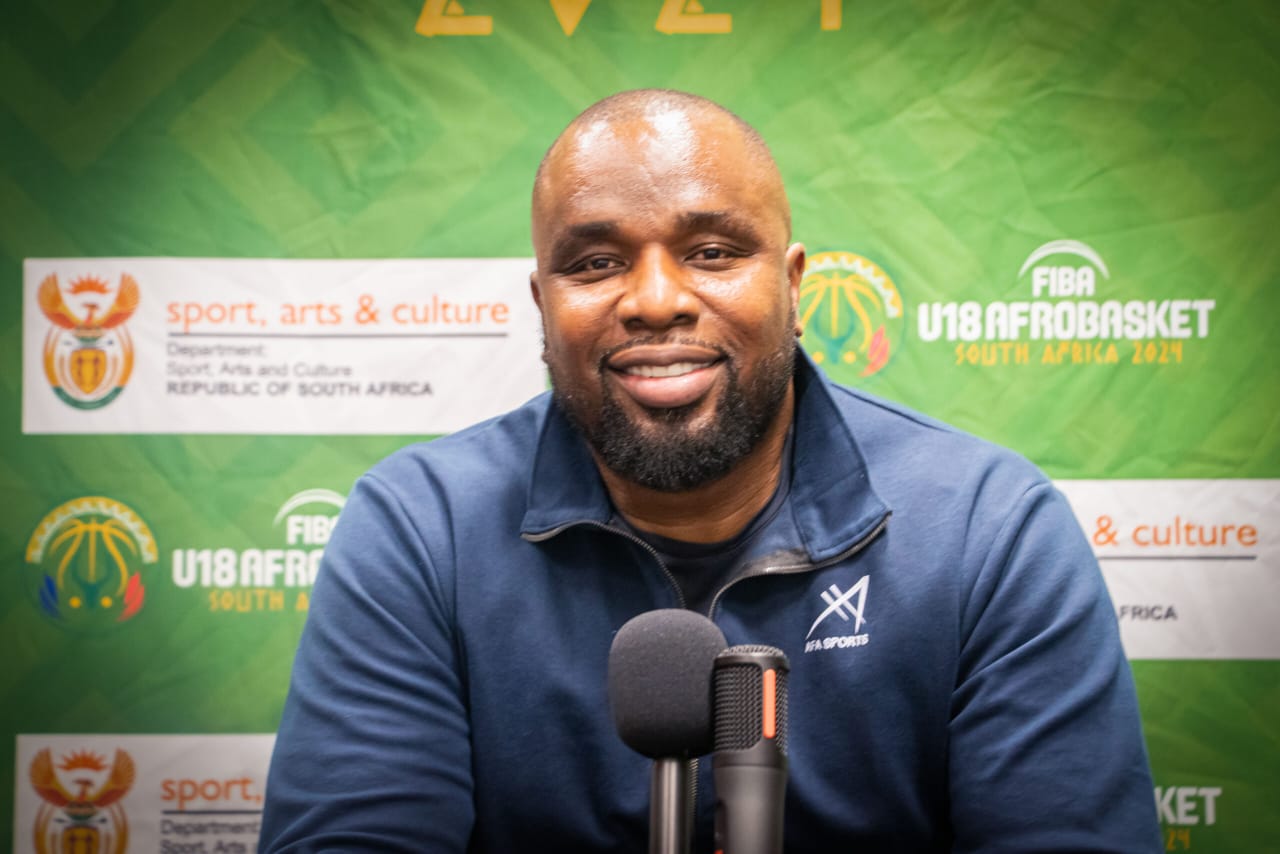
AFA Sports owner, Ugo Udezue, is determined to get his story published exactly as it truly happened and has decided to tell his own story.




AFA Sports: How a little local idea became a commitment to African Basketball
A lot of stories about Africa and Africans were first written by the West, and this created a lot of distortions. A lot of startups and allied businesses have sprung up in Nigeria without quality documentation of their early days.
AFA Sports owner, Ugo Udezue, is determined to get his story published exactly as it truly happened and has decided to tell his own story.
He says, “The idea for AFA Sports was born in 2016 during my time running the Continental Basketball League (CBL). At the time, I was actively trying – without success – to secure an international apparel sponsor for the league. Despite my background as a former NBA agent and my global relationships, no brand was willing to commit.
“What became clear was simple: global sportswear companies had little interest in African basketball without guaranteed television exposure, commercial scale, or political certainty. None of that existed then. So, I made a decision. If the system did not support the game, the game would have to support itself.
“AFA Sports was conceived not as a commercial shortcut, but as a local solution – a homegrown sports merchandise company designed to grow alongside African basketball.”
The name AFA took months to be born. Branding matters in the wear industry, and Ugo was looking for a name that would represent the continent or at least Nigeria.
“As an Igbo man, “Afa” means name. One day, the question became obvious: what name should I give this idea? AFA Sports: Africa, for Africa. That same night, around 2am, I had a vivid dream of the logo. I woke up and sketched it immediately. That was the beginning.”
He got a quality idea but had no training in clothing and apparel making, but still had the hunger to come up with something good for the whole of Africa.
“At the time, I had no formal experience in apparel manufacturing or retail. I traveled to China without a playbook – learning directly from trade fairs, factories, warehouses, and shop owners. I taught myself logistics, inventory management, Nigerian business governance, and staffing through reading, observation, and trial by fire. Many nights stretched into days without sleep.’
Apart from these challenges, the idea lacked financial backing. And this was how Musa Kida got involved.
“Before Musa Kida became the President of the Nigerian Basketball Federation (NBBF), he had already played a key role in rescuing the CBL years earlier, after the league was destabilized when sponsors were contacted and told it was “illegal,” causing financial collapse overnight. At a moment when salaries were owed, and the league was at risk, Musa Kida stepped in. We had barely met once before.
“When I later pitched AFA Sports to him, he committed – in one day – to becoming a co-founder and partner. He believed in the idea because he understood sustainability. His mentorship helped me navigate the realities of doing business in Nigeria during an extremely fragile period.
“Musa Kida accepted to invest with a caveat: That AFAsports manufactures its products in Nigeria, empowering the labour sector and contributing to the country’s economy.”
AFA Sports, over time, became the official partner of the NBBF and apparel supplier to the national teams, D’Tigress and D’Tigers, but now only the women’s team.
“In 2017, I was approached by then NBBF Vice President, Babs Ogunade, regarding an urgent crisis: the women’s national team was heading to AfroBasket in Mali without uniforms due to unresolved issues with PEAK during a leadership transition. And we were given just five days to supply the team with the uniforms.
“My team designed, produced, and delivered full kits in three days. We sent staff to Mali to hand-deliver the uniforms—at high cost to AFA Sports.”
The contract details with the NBBF.
“After that tournament, I was asked to support the women’s team until the PEAK situation was resolved. We agreed to a four-year supply-only arrangement, with no financial compensation, covering only the women’s team and including a right of first refusal.”
The NBBF Vice President, Babs Ogunade, explained what transpired in 2017 and how the relationship has worked.
“We just took over on a new board, and it was time for Afrobasket in Mali. We had issues with the NBBF kit partners, Peak, because we had been branded illegal by the previous administration. The only alternative was to fall back to late Usman (a jersey tailor who kitted many Nigerian clubs and national teams). That was how we got AFA. Musa Kida made it clear to the board members that he could not get involved because he had an interest in AFA. I headed the negotiations and signed eventually. We were in a tight corner, and we all agreed to go.
“Nobody raised any objection, and we got AFA Sports just as we were leaving for Bamako, and that was why they brought them to Bamako. We had played the first two games with makeshift dresses. The agreement does not involve money. We receive for free and wear to play.”
Ugo Udezue adds, “At that time, I was not a board member, and there was no cash consideration. There was no broadcast exposure as AfroBasket games were not televised. FIBA’s private streaming deal meant African basketball was largely invisible globally. Despite this, AFA Sports continued—out of belief, not profit.
“Since then, AFA Sports has supplied the women’s team consistently and supported the men’s team only when requested, again without financial incentive. This was an investment in national pride and brand credibility, not a revenue stream.
“Globally, apparel sponsorships are justified by broadcast reach, digital impressions, merchandise sales, and activations. For most of the last decade, African basketball—and many Nigerian sports—offered none of these at scale. And this is why international brands quietly exited.”
AFA Sports’ commitment to Nigerian sports has never been limited to basketball. Over the years, the company has supported Nigerian Volleyball, Paralympic athletes and associations, and multiple sports federations—often providing equipment and apparel without financial compensation, during periods when funding gaps threatened participation.
“AFA Sports was the official apparel partner for Team Nigeria at the Tokyo Olympic Games, supplying athletics gear free of charge. We have also supported Cameroon and other international teams.
“These were not profitable undertakings. Over time, AFA Sports evolved—by necessity—into a broader lifestyle, fitness, and performance brand. That evolution is standard globally and essential for survival.”